Iron Deficiency in Indian Women: Why Diet Alone May Not Be Enough

"Iron deficiency is not just a number on a lab report - it is the reason you are exhausted by 3 PM, losing hair in clumps, and feeling breathless climbing one flight of stairs. And in India, we are not even testing the right marker." - Dt. Trishala Goswami, MSc Clinical Nutritionist
She was 28, a software developer, and convinced she was lazy. Meera came to my clinic not for iron deficiency but for weight loss. She wanted to know why she could not summon the energy to exercise after work, why she needed two cups of coffee just to get through the afternoon, and why her hair was falling out despite using expensive shampoos.
Her hemoglobin was 11.2 g/dL - technically within the "normal" range. Her previous doctor had told her she was fine. But when I ordered a serum ferritin test, the result was 8 ng/mL. Her iron stores were almost completely depleted. She was not lazy. She was iron deficient.
This story is devastatingly common. Iron deficiency is the most prevalent nutritional deficiency in India, and it disproportionately affects women. The National Family Health Survey (NFHS-5, 2019-21) found that 57% of Indian women aged 15-49 are anemic. Among pregnant women, the figure rises to 52%. These are not numbers from a developing nation - these are numbers from the world's fifth-largest economy, and they have barely improved over two decades.
The reasons are complex and deeply intertwined with the Indian diet, cultural food practices, and inadequate diagnostic standards. This article examines why iron deficiency is so persistent among Indian women and why dietary changes alone, while important, are often insufficient.
Table of Contents
The Scale of the Problem: NFHS Data
The National Family Health Survey is India's largest demographic and health survey, and its data on anemia paints a grim picture. NFHS-5 (2019-21) revealed that 57% of women aged 15-49 years are anemic, compared to 53% in NFHS-4 (2015-16). The problem is actually getting worse despite decades of iron supplementation programs.
Among specific age groups, the prevalence is striking:
- Adolescent girls (15-19 years): 59.1% anemic
- Women of reproductive age (20-49 years): 56.2% anemic
- Pregnant women: 52.2% anemic
State-level variations are dramatic. In states like Jharkhand, West Bengal, and Assam, anemia prevalence among women exceeds 65%. Even in relatively prosperous states like Gujarat and Maharashtra, the figures hover around 55%.
What these numbers represent in human terms is millions of women living with chronic fatigue, reduced work productivity, impaired immunity, compromised pregnancy outcomes, and diminished quality of life - often without knowing that iron deficiency is the cause.
A systematic review by Kassebaum et al. (2014), published in Blood, analyzing data from 187 countries, identified India as having the highest burden of iron deficiency anemia globally, with South Asian women bearing a disproportionate share. The review emphasized that dietary factors, rather than blood loss alone, play a central role in this regional burden.
Iron Absorption Inhibitors in the Indian Diet
This is where the Indian dietary context becomes critical. The traditional Indian diet is rich in iron-containing foods - lentils, green leafy vegetables, whole grains, and legumes. So why are Indian women so iron deficient despite eating these foods regularly?
The answer lies in iron absorption inhibitors - compounds naturally present in many staple Indian foods that dramatically reduce the amount of iron your body can actually absorb from a meal.
Phytates (phytic acid). Found in whole grains (wheat, rice, bajra, ragi), legumes (dal, rajma, chana, chole), and nuts. Phytates bind to iron in the gut, forming insoluble complexes that cannot be absorbed. The typical Indian thali - roti, dal, rice, and sabzi - contains phytates at virtually every component. A study by Hurrell et al. (2003), published in the International Journal for Vitamin and Nutrition Research, demonstrated that phytates can reduce iron absorption by 50-65% depending on the phytate-to-iron ratio in the meal.
Tannins. Found in tea and coffee - two beverages consumed in enormous quantities across India. The tannins in tea can reduce iron absorption by up to 60% when consumed with or immediately after a meal. The Indian habit of drinking chai with breakfast and after lunch and dinner means that the iron from those meals is significantly less available. This is perhaps the single most impactful dietary behavior contributing to iron deficiency in Indian women.
Calcium. Found in dairy products - dahi, paneer, milk, chaas. Calcium competes with iron for absorption in the gut. The Indian practice of having dahi or buttermilk with every lunch and dinner, while excellent for other nutritional reasons, can reduce iron absorption from that meal.
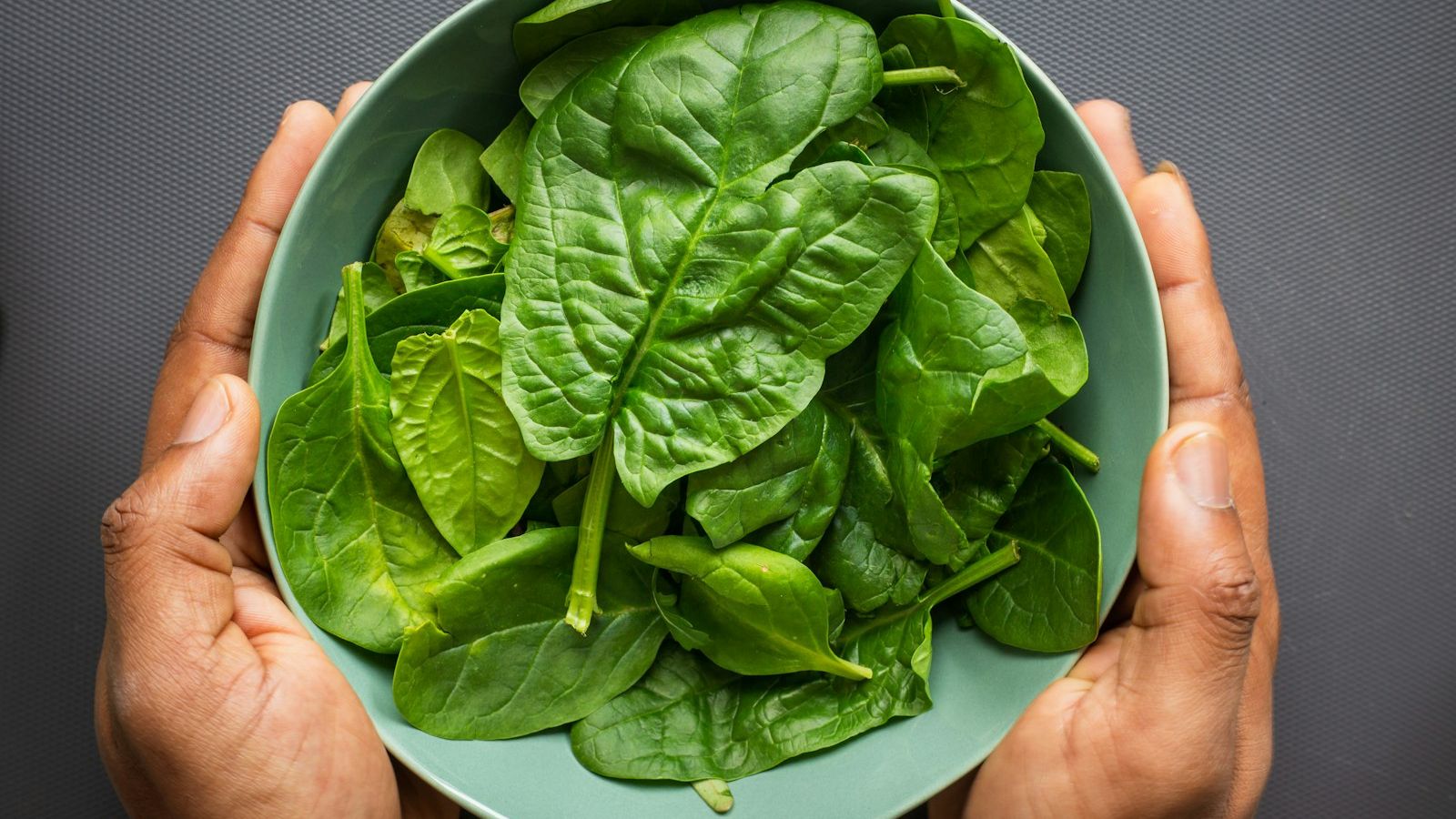
Oxalates. Found in spinach (palak), amaranth (chaulai), and beet greens. Here is the painful irony: palak, the food most commonly recommended for iron deficiency in India, contains high levels of oxalates that bind to its iron and make it largely unavailable for absorption. The iron in 100g of raw palak looks impressive on paper (2.7 mg), but the bioavailability is estimated at only 2-5%. In my practice, I regularly meet women who have been eating palak daily for months on their doctor's advice with no improvement in their iron levels.
Polyphenols. Found in coffee, certain spices, and some vegetables. These compounds, while often beneficial for other health reasons, further reduce non-heme iron absorption.
The cumulative effect of these inhibitors means that an Indian vegetarian woman eating what appears to be an iron-rich diet may be absorbing only a fraction of the iron present in her food.
Heme vs Non-Heme Iron: A Critical Distinction
Iron in food exists in two forms, and the distinction matters enormously:
Heme iron is found exclusively in animal foods - red meat, poultry, fish, and organ meats. It has a bioavailability of approximately 15-35%, meaning your body absorbs a significant proportion of the iron present. Crucially, heme iron absorption is largely unaffected by the inhibitors described above. Phytates, tannins, calcium, and oxalates have minimal impact on heme iron absorption.
Non-heme iron is found in plant foods - lentils, beans, grains, leafy greens, and dried fruits. It has a bioavailability of only 2-20%, and is highly susceptible to inhibitors. The presence of phytates can drop this to as low as 1-2%.
The Indian diet - particularly for the roughly 30% of Indians who are vegetarian and the many more who eat meat infrequently - relies almost entirely on non-heme iron. This means that even when the total dietary iron intake looks adequate on paper, the actually absorbed iron may be far below requirements.
This is not an argument for everyone to eat meat. It is an argument for vegetarians and flexitarians to be strategic about how they consume iron-rich foods and to understand that total iron intake and absorbed iron are very different numbers.
For non-vegetarian Indian women, increasing the frequency of iron-rich animal foods - chicken liver (the richest source), mutton, eggs, and fish - can meaningfully improve iron status. Chicken liver, for instance, contains approximately 9 mg of heme iron per 100g with 25-30% absorption rates.
Iron Absorption Enhancers: The Vitamin C Strategy
If inhibitors are the problem, enhancers are part of the solution. The most powerful dietary iron absorption enhancer is vitamin C (ascorbic acid).
Vitamin C converts non-heme iron from its poorly absorbed ferric (Fe3+) form to the more absorbable ferrous (Fe2+) form. It can increase iron absorption from a meal by 2-6 times. Hallberg et al. (1989), in the American Journal of Clinical Nutrition, demonstrated that adding 50 mg of vitamin C to a meal doubled iron absorption, while 100 mg increased it three-fold.
In practical Indian dietary terms, this means:
- Squeeze lemon (nimbu) generously over dal, sabzi, and salads
- Eat amla (Indian gooseberry) daily - one of the richest natural sources of vitamin C
- Include tomato-based gravies with iron-rich meals
- Add capsicum (shimla mirch) to vegetable preparations
- Eat guava, orange, or sweet lime as a dessert after iron-rich meals rather than as a standalone snack
- Add a glass of nimbu pani (without sugar) with lunch and dinner
The timing matters. Vitamin C must be consumed in the same meal as the iron-rich food to have its enhancing effect. Eating an orange for breakfast does not improve iron absorption from lunch.
Equally important is the strategic separation of inhibitors. The simplest and most impactful change for many Indian women is delaying tea and coffee by at least one hour after meals. Drinking chai with breakfast is a deeply ingrained cultural habit, but it can reduce iron absorption from that meal by more than half. Having tea between meals - at 11 AM and 4 PM rather than with breakfast and lunch - preserves the cultural practice while removing the inhibitory effect.
Ferritin vs Hemoglobin: Why We Are Testing Wrong
This is perhaps the most important clinical point in this article: hemoglobin alone is an inadequate marker for iron status.
Hemoglobin measures the iron currently in your red blood cells. It is the last marker to drop in iron deficiency - by the time hemoglobin falls below the normal range (12 g/dL for women), your iron stores have been depleted for months or even years.
Serum ferritin measures your iron stores - the iron your body has banked for future use. It is the earliest and most sensitive marker of iron deficiency. Ferritin levels below 30 ng/mL indicate depleted iron stores, even when hemoglobin is still normal. Symptoms of iron deficiency - fatigue, hair loss, brain fog, poor exercise tolerance, restless legs, brittle nails - often begin when ferritin drops below 30-50 ng/mL, well before hemoglobin is affected.
In my practice, I regularly see women with hemoglobin levels of 11-12 g/dL (technically "normal") who have ferritin levels below 15 ng/mL. They are symptomatic, exhausted, and losing hair - but have been told their blood work is fine because the only test ordered was a complete blood count.
The clinical stages of iron deficiency are:
- Iron depletion - Ferritin drops below 30 ng/mL. Stores are emptying. Hemoglobin is still normal. Symptoms may begin.
- Iron-deficient erythropoiesis - Ferritin is very low, transferrin saturation drops. Red blood cell production is compromised. Hemoglobin may still be borderline normal.
- Iron deficiency anemia - Hemoglobin drops below 12 g/dL. This is the final stage, and it represents a failure of earlier detection.
If you are an Indian woman experiencing unexplained fatigue, hair loss, breathlessness, brain fog, or poor exercise recovery, ask your doctor for a serum ferritin test in addition to a CBC. Optimal ferritin for women is 50-100 ng/mL - not merely above the lab reference range minimum of 10-15 ng/mL.
When Supplementation Becomes Necessary
Given the absorption challenges inherent in the Indian diet, dietary changes alone are often insufficient to correct established iron deficiency. Here is when supplementation becomes necessary:
Ferritin below 30 ng/mL with symptoms. Oral iron supplementation is typically indicated. The most commonly prescribed forms in India are ferrous sulfate and ferrous fumarate. However, these forms frequently cause gastrointestinal side effects - nausea, constipation, dark stools, and abdominal discomfort - leading many women to discontinue treatment.
Better-tolerated alternatives. Iron bisglycinate (chelated iron) is significantly better tolerated than ferrous sulfate while maintaining comparable absorption. Carbonyl iron is another gentle option. These forms are increasingly available in India, though they cost more than standard ferrous sulfate.
Dosing strategy. Recent research has challenged the traditional approach of daily iron supplementation. Moretti et al. (2015), published in Blood, demonstrated that alternate-day iron supplementation (taking iron every other day rather than daily) actually resulted in higher fractional iron absorption. This is because iron supplementation increases hepcidin - a hormone that blocks iron absorption - for approximately 24 hours. Taking iron daily means each dose is partially blocked by the hepcidin response from the previous dose. Alternate-day dosing allows hepcidin to normalize between doses.
In my practice, I typically recommend:
- Take iron supplements on an empty stomach or with a vitamin C-rich food
- Avoid taking iron with tea, coffee, dairy, or calcium supplements
- Consider alternate-day dosing for better absorption and fewer side effects
- Retest ferritin after 3 months to assess response
When oral supplementation fails. Some women do not respond adequately to oral iron due to gut absorption issues, celiac disease, inflammatory bowel conditions, or extremely low baseline levels. In these cases, intravenous iron infusion may be necessary - a decision made in consultation with a physician.
During pregnancy. Iron requirements increase dramatically during pregnancy (from 18 mg/day to 27 mg/day). Given that many Indian women enter pregnancy already iron-depleted, supplementation during pregnancy is almost universally necessary. The WHO recommends 30-60 mg of elemental iron daily during pregnancy in regions with high anemia prevalence.
The Iron Kadhai Question
No discussion of iron deficiency in India would be complete without addressing the iron kadhai - the traditional cast iron cookware that grandmothers swear improves iron levels.
Is there evidence for this? Surprisingly, yes - with caveats.
Cooking acidic foods (tomato-based curries, tamarind dishes, lemon-based preparations) in cast iron cookware does leach measurable amounts of iron into food. The iron leached is in the non-heme form but is more bioavailable than the iron naturally present in many plant foods. Studies have shown that cooking in iron vessels can increase the iron content of food by 2-10 times, with the greatest transfer occurring with acidic, high-moisture foods cooked for longer durations.
However, cooking in iron vessels alone is not sufficient to treat iron deficiency. The amount of iron transferred is variable and unpredictable. It can supplement dietary intake but cannot replace targeted supplementation when ferritin is low.
My recommendation: use iron kadhai as one tool in a comprehensive iron strategy, not as the sole solution. Cook your dal, sambar, and tomato-based sabzis in cast iron. But do not rely on it to correct a ferritin of 8 ng/mL.
A Practical Iron-Boosting Strategy for Indian Women
Based on the evidence and my clinical experience, here is a comprehensive approach to improving iron status within the Indian dietary framework:
Separate tea and coffee from meals. Wait at least 60-90 minutes after eating before drinking chai or coffee. This single change can double iron absorption from your meals. Have your chai at 11 AM and 4 PM rather than with breakfast and lunch.
Add vitamin C to every iron-rich meal. Squeeze lemon over dal, add tomato to sabzi, include amla chutney, eat a guava or orange after lunch. Make this a non-negotiable habit.
Soak and sprout legumes. Soaking dal, rajma, chole, and chana overnight and sprouting them reduces phytate content by 30-50%, significantly improving iron bioavailability. Sprouted moong and moth are excellent iron sources with reduced anti-nutritional factors.
Ferment when possible. Fermentation (as in dosa batter, idli, dhokla, and kanji) reduces phytates and increases mineral bioavailability. South Indian fermented foods are particularly effective at improving iron absorption from accompanying dishes.
Separate calcium and iron. Do not take calcium supplements with iron-rich meals. If you take a calcium supplement, have it at bedtime rather than with lunch or dinner.
Include iron-rich foods daily. The best plant sources (per serving, accounting for bioavailability) include: jaggery (gur), garden cress seeds (halim/aliv), black sesame (kala til), amaranth (rajgira), dried figs (anjeer), dates (khajoor), watermelon seeds, and pumpkin seeds. Among animal sources: chicken liver, mutton, egg yolks, and sardines.
Get tested properly. Request serum ferritin, not just hemoglobin. Aim for ferritin above 50 ng/mL. Retest every 3-6 months until optimal levels are achieved and maintained.
Supplement when needed without guilt. Taking an iron supplement is not a failure of your diet. It is a rational response to the biological reality that the Indian dietary pattern, despite its many strengths, creates significant iron absorption challenges.
Key Takeaways
- 57% of Indian women aged 15-49 are anemic according to NFHS-5 data, making iron deficiency India's most prevalent nutritional problem.
- The Indian diet contains abundant iron but also abundant iron absorption inhibitors: phytates in grains and legumes, tannins in tea, calcium in dairy, and oxalates in palak.
- Non-heme iron (from plant foods) has only 2-20% bioavailability compared to 15-35% for heme iron (from animal foods), and is highly susceptible to inhibitors.
- Vitamin C is the most powerful dietary iron absorption enhancer, increasing absorption 2-6 fold when consumed in the same meal.
- Serum ferritin is a far better marker of iron status than hemoglobin. Ask for ferritin testing and aim for levels above 50 ng/mL.
- Supplementation is often necessary for Indian women with depleted stores. Alternate-day dosing may improve absorption and reduce side effects.
- Cooking in iron kadhai helps but is not sufficient to treat established deficiency.
Iron deficiency is treatable, but it requires the right diagnosis, the right dietary strategy, and often the right supplementation protocol. At Yogyaahar, Dt. Trishala Goswami creates personalized iron-repletion plans that account for your dietary pattern, absorption factors, and clinical markers.
If you are experiencing persistent fatigue, hair loss, or breathlessness, book a consultation to get a comprehensive iron assessment.
WhatsApp Dt. Trishala Goswami for a Consultation
Medical Disclaimer: This article is for educational purposes only and does not constitute medical advice. Iron deficiency and anemia have multiple potential causes beyond dietary factors, including blood loss, malabsorption conditions, and chronic disease. Always consult a qualified physician for proper diagnosis. Do not self-prescribe iron supplements, as excess iron can be harmful. Work with a qualified clinical nutritionist or your doctor to determine the appropriate supplementation protocol for your individual needs.
Want a plan built around your body and your food? Explore our nutrition programs with Dt. Trishala Goswami.
MSc Clinical Nutritionist · Diabetes Educator · Certified Nutrigenomics Specialist
Dt. Trishala Goswami is a clinical nutritionist and certified diabetes educator who designs personalized, science-backed nutrition programs for clients across India and abroad. She specializes in diabetes, PCOS, gut health, and nutrigenomics.
More about Dt. TrishalaWant a plan built around you?
Articles can’t replace personalised care. Book a 30-min consultation with Dt. Trishala.
Living outside India? See how online consultations work for NRIs & global clients →
Related reads
How to Reduce Fatty Liver: An Indian Diet Guide (7-Day Plan)
Grade 1 or Grade 2 fatty liver on your ultrasound is not a sentence - it is one of the most reversible findings in medicine. A clinical nutritionist explains why Indians get it at normal weights, and exactly what to eat to clear it.
High Blood Pressure Diet: The Indian Guide to DASH and Hidden Salt
You can cut the salt in your cooking to zero and still eat twice the safe limit. A clinical nutritionist explains where sodium actually hides in an Indian kitchen, how to translate the DASH diet into Indian meals, and who must be careful with potassium.
How to Reduce Cholesterol: An Indian Diet Guide That Works Anywhere
Being vegetarian does not protect you from high cholesterol - and for South Asians, the lipid report that matters looks different from the one Western guidelines were built on. A clinical nutritionist explains what actually lowers LDL on an Indian plate, in India or abroad.