Online vs In-Person Dietitian: Which Is Better? (2026)
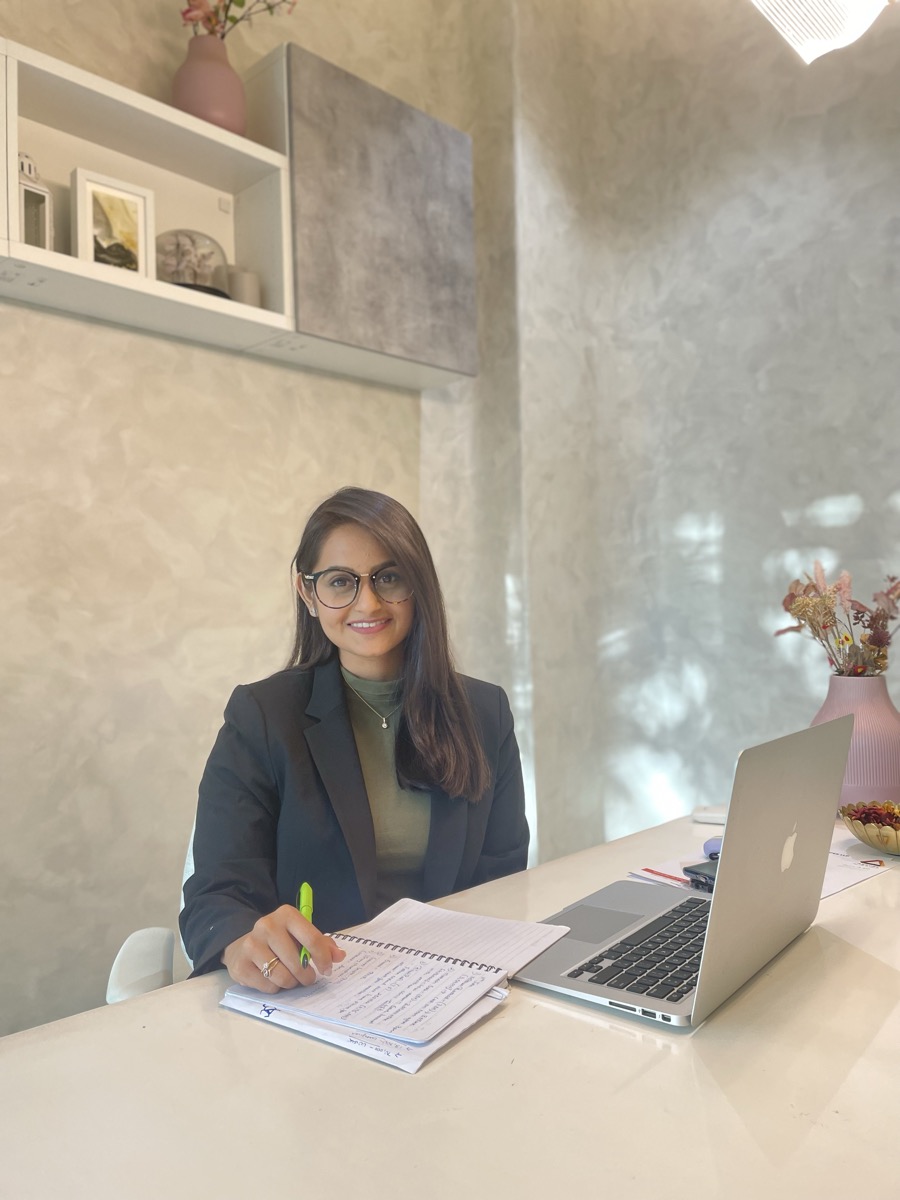
"People assume sitting across a desk from a dietitian is somehow more serious than a video call. But nutrition results do not come from the room you meet in - they come from what you eat between appointments. The format that gives you the easiest follow-up usually wins, and for most people, that is online." - Dt. Trishala Goswami, MSc Clinical Nutritionist, Certified Nutrigenomics Specialist
If you have finally decided to get real help with your eating - for weight, PCOS, diabetes, gut health, or just feeling better - the next question is usually: should I see someone in person, or is online just as good? It is a fair question. Here is an honest, side-by-side answer from a clinical nutritionist who works entirely online.
The short answer
For the vast majority of nutrition goals, online works as well as in-person, and often better - because the thing that actually drives results is consistent follow-up, and that is easier to do virtually. The main exceptions are situations needing hands-on physical assessment, which a nutritionist would refer you to a doctor for anyway.
Online vs in-person: the honest comparison
| Factor | In-person dietitian | Online dietitian |
|---|---|---|
| **Follow-up** | Often weeks apart; easy to drift | Quick check-ins over chat or call; plan adjusts in real life |
| **Choice of specialist** | Limited to who is near you | Choose someone who specialises in your exact issue (PCOS, diabetes, gut) |
| **Your real kitchen** | Described from memory | Shown on camera - more practical plans |
| **Bloodwork review** | Same | Same - reports are read identically on screen |
| **Travel and time** | Commute, waiting room, traffic | Zero travel; fits a lunch break |
| **Cost** | Often higher (clinic overheads) | Usually more accessible |
| **Records** | Paper sheets, easy to lose | Digital plan and messages, always to hand |
| **Geography** | Must live nearby | Works anywhere, including for NRIs abroad |
5 myths about online dietitians
Myth 1: "They can't see my reports properly." They can - you upload your HbA1c, hormone panel, or vitamin levels, and they are read exactly as they would be in a clinic.
Myth 2: "It's less personal." A video call where you walk your nutritionist through your actual fridge and pantry is often more personal and practical than a desk conversation.
Myth 3: "Follow-up is weaker." The opposite. Quick messages between sessions mean your plan adapts to a stall, a festival, or travel - instead of waiting weeks for the next slot.
Myth 4: "It only works for simple goals." Online care handles PCOS, diabetes, gut issues, thyroid, and pregnancy nutrition routinely, always coordinated with your doctor.
Myth 5: "I won't stay accountable." Digital check-ins and food logs usually make people more accountable, not less, because help is a message away.
When in-person genuinely makes sense
To be fair, a few situations do favour in-person or, more accurately, a doctor:
- You need a physical examination or procedure - that is a doctor's job, not a dietitian's, in either format.
- You have a complex medical condition needing in-person monitoring - here you want a medical team, with a nutritionist supporting them, online or not.
- You simply prefer face-to-face and have an excellent specialist nearby - personal comfort matters, and that is a valid reason.
For everything else - weight, PCOS, diabetes, gut health, energy, deficiencies - the format is far less important than the quality of the nutritionist and the consistency of follow-up.
How to choose the right dietitian (online or in person)
The short checklist: a registered qualification you can verify, a plan built around your own food (not a template), experience with your specific condition, real follow-up, and an approach that builds long-term habits instead of crash diets. Whichever format you pick, judge them on these five things:
- Verifiable credentials. Look for a registered dietitian or a clinical nutritionist with a recognised degree (MSc Clinical Nutrition or equivalent) - and condition-specific training where relevant, like a Diabetes Educator certification for blood sugar or nutrigenomics certification for DNA-based plans.
- A personalised plan, not a PDF. They should review your history, labs, and daily routine before prescribing anything. If everyone gets the same 1,200-calorie chart, walk away.
- Experience with your condition. PCOS, thyroid, diabetes, and gut issues each change what a good plan looks like. Ask directly how many such cases they handle.
- Real follow-up. Results come from the adjustments, not the first plan. Weekly or bi-weekly reviews - where your readings and struggles actually change the plan - are the difference between a programme and a pamphlet.
- Habits over extremes. If the plan bans entire food groups (rice, roti, fruit) or promises a dramatic number in weeks, it isn't built to last. Sustainable plans keep the food you love in measured, structured form.
If your goal is specific, start here:
- PCOS: how to choose an online PCOS dietitian
- Diabetes or pre-diabetes: how to choose an online diabetes nutritionist
- Living abroad: an Indian nutritionist for NRIs
How Yogyaahar works
Yogyaahar is the 100% online clinical nutrition practice of Dt. Trishala Goswami (MSc Clinical Nutritionist, Certified Nutrigenomics Specialist, Diabetes Educator). Consultations run over Zoom, phone, or chat, with plans built around Indian food and follow-up that fits your life - in India or anywhere in the world. Explore the programs or message us to find the right fit.
This article is general education, not a substitute for personalised medical care. If you have a diagnosed condition, work with your doctor alongside a qualified clinical nutritionist.
References
- Academy of Nutrition and Dietetics. Telehealth and nutrition care. eatright.org
- World Health Organization. Healthy diet. who.int
- Indian Council of Medical Research - National Institute of Nutrition (ICMR-NIN). Dietary Guidelines for Indians.
Frequently asked questions
Is an online dietitian as good as an in-person one?
For most nutrition goals - weight loss, PCOS, diabetes, gut health - yes, and often better, because results depend on consistent follow-up, which is easier online. Bloodwork is reviewed identically on screen, and you can choose a specialist in your exact issue rather than whoever is nearby. In-person is mainly preferable when a physical exam is needed, which is a doctor's role in either case.
Is an online dietitian cheaper than in-person?
Often, yes. Online practices have lower overheads than clinics, and you save on travel and time. More importantly, the easier follow-up tends to deliver better value because the plan actually gets adjusted and followed.
Can an online dietitian help with PCOS or diabetes?
Yes - these are among the most common reasons people consult online. Both are managed through food, habits, and regular follow-up alongside your doctor, all of which work well virtually. See our guides on choosing an [online PCOS dietitian](/blog/online-pcos-dietitian-india-nri) or [online diabetes nutritionist](/blog/online-diabetes-nutritionist-india-nri).
How do I choose the best weight loss nutritionist in India?
Use five filters: verifiable credentials (a registered dietitian or MSc clinical nutritionist), a personalised plan built after reviewing your history and labs, experience with your specific condition (PCOS, thyroid, diabetes), structured follow-up where the plan actually changes with your progress, and an approach that keeps Indian staples like rice and roti in measured form rather than banning them. Whether they work online or in person matters far less than these five.
How do I know if an online dietitian is qualified?
Look for recognised qualifications (such as an MSc in Clinical Nutrition and relevant certifications), a plan built around your history and labs, coordination with your doctor, and structured follow-up. Avoid anyone promising guaranteed results or selling one-size-fits-all plans with no personalisation.
MSc Clinical Nutritionist · Diabetes Educator · Certified Nutrigenomics Specialist
Dt. Trishala Goswami is a clinical nutritionist and certified diabetes educator who designs personalized, science-backed nutrition programs for clients across India and abroad. She specializes in diabetes, PCOS, gut health, and nutrigenomics.
More about Dt. TrishalaWant a personalised Weight Loss plan?
Articles can’t replace personalised care. Book a 30-min consultation with Dt. Trishala.
Living outside India? See how online consultations work for NRIs & global clients →
Related reads
Mounjaro Diet Plan: 7-Day Indian Meal Plan (What to Eat on Tirzepatide)
What to eat on Mounjaro (tirzepatide) if you cook Indian food in the UK, US, Canada, Australia, the UAE or Singapore. A 7-day vegetarian, egg and non-veg meal plan built around your weekly injection, how to eat when your prescriber steps up the dose, Indian food fixes for nausea,
Calories and Protein in Indian Foods: Roti, Rice, Dal, Idli, Poha and More
One roti, one bowl of rice, one katori of dal: a clinical nutritionist's table of calories and protein for 50+ everyday Indian foods, per piece and per bowl, with the portion sizes spelled out so the numbers mean something.
Coming Off Ozempic or Mounjaro Without Regaining: An Indian Diet Plan
Studies show most people regain much of the weight after stopping a GLP-1. A Certified Diabetes Educator explains why - and how to hold your results with an Indian diet, the right protein, and habits that outlast the medication.