IBS Diet Plan for Indians: What to Eat, What to Avoid, and Why

"IBS is not one condition - it is a spectrum of functional gut disturbances with different triggers for different people. The goal of dietary management is not to eat as restrictively as possible but to identify your specific triggers, manage them strategically, and maintain the richest possible version of your food culture." - Dt. Trishala Goswami, MSc Clinical Nutritionist
A client - let us call her Kavitha - had been managing severe IBS-D (diarrhoea-predominant) for three years. She had consulted three gastroenterologists and been told to "avoid spicy food and eat bland." She had eliminated virtually all Indian food from her diet, eating plain rice, plain dal, and boiled vegetables daily. She was miserable - not just physically, but culturally. Food is deeply central to Indian life, and she felt cut off from every family meal and celebration.
When we introduced the structured low-FODMAP approach adapted for Indian eating - with specific food swaps and the "hing hack" - her symptoms improved by approximately 70% over eight weeks. And she was eating dal, sabzi, and idli again.
Understanding IBS: The Three Types
IBS (Irritable Bowel Syndrome) is a functional gastrointestinal disorder characterised by recurring abdominal pain, bloating, and altered bowel habits in the absence of structural damage. It is one of the most common gastrointestinal diagnoses in India.
Three main subtypes:
- IBS-C (constipation-predominant): Infrequent, hard, or incomplete stools; bloating; abdominal discomfort
- IBS-D (diarrhoea-predominant): Frequent loose stools, urgency, morning rushing
- IBS-M (mixed): Alternating between constipation and diarrhoea
Diet affects all three types, but specific dietary interventions are more effective for some subtypes than others. What works for IBS-D may worsen IBS-C. The guidance below applies broadly and indicates where subtype matters.
What Is the Low-FODMAP Diet?
FODMAPs (Fermentable Oligosaccharides, Disaccharides, Monosaccharides, and Polyols) are short-chain carbohydrates that are poorly absorbed in the small intestine and rapidly fermented by gut bacteria, producing gas and drawing water into the bowel - triggering IBS symptoms.
A large share of IBS turns out to be small intestinal bacterial overgrowth, which needs a different plan - SIBO and Indian diets covers that case. The low-FODMAP diet, developed at Monash University, is currently the most evidence-based dietary approach for IBS. It reduces fermentable carbohydrates to calm the gut, then systematically reintroduces foods to identify personal triggers. It is not a permanent restriction - it is a three-phase protocol.
The challenge for Indians: several cornerstone Indian foods are high FODMAP.
The Low-FODMAP Challenge for Indian Eaters
| Traditional Indian Staple | FODMAP Issue | What to Do |
|---|---|---|
| Wheat roti | High in fructans (FODMAP) | Switch to rice or rice-based alternatives |
| Onion | Fructans - one of the highest-FODMAP foods | Use the hing substitute (see below) |
| Garlic | Fructans - very high FODMAP | Use hing-infused oil (see below) |
| Rajma (kidney beans, large portions) | Galactooligosaccharides (GOS) | Small portions after overnight soaking only |
| Kabuli chana (chickpeas, large portions) | GOS | Small portions (1/4 cup canned, drained) |
| Cauliflower | Sorbitol + mannitol | Limit or avoid during elimination |
| Cabbage | Fructans | Limit or avoid |
| Apples | Sorbitol + fructose | Switch to safer fruits |
| Mango (large portions) | Excess fructose | Small portions only |
This is not a comprehensive list. The Monash University Low-FODMAP app is the most reliable resource for checking specific foods and serving sizes.
The Hing Hack: Replacing Onion and Garlic in Indian Cooking
The most game-changing adaptation for low-FODMAP Indian cooking is the hing (asafoetida) technique.
The FODMAPs in onion and garlic are water-soluble - they leach into water-based cooking (soups, curries with water). However, they are not fat-soluble. The flavour compounds that make onion and garlic taste like onion and garlic ARE fat-soluble.
Method: Heat your cooking oil in the pan. Add a small pinch of hing (asafoetida) to the hot oil. Let it sizzle for 10-15 seconds. Use this hing-infused oil to start your curry, dal, or sabzi. The hing provides a very similar depth of flavour to onion and garlic - without any FODMAP content - because the flavour compounds are released into the fat.
This single technique allows virtually all Indian cooking to continue with a substitution that most family members will not notice.
Note: Asafoetida/hing itself is low-FODMAP in normal culinary amounts (a small pinch). However, some commercial hing blends are mixed with wheat flour - read the label and choose pure hing or pure hing mixed only with rice flour.
What to Eat: Low-FODMAP Indian Foods
Safe grains and starches:
- Rice (all types - white, brown, basmati, parboiled) - rice is one of the lowest-FODMAP grains
- Rice-based idli and dosa - fermented, easier to digest, low-FODMAP
- Poha (flattened rice) - low-FODMAP
- Oats (rolled or steel-cut, not flavoured) - low-FODMAP in 1/2 cup portions
- Corn/polenta - low-FODMAP in moderate portions
- Buckwheat (kuttu) - low-FODMAP; already used in Indian fasting foods
- Tapioca/sabudana - low-FODMAP; common in Indian fasting foods
Safe vegetables:
- Bottle gourd (lauki), ridge gourd (turai), tinda, bitter gourd (karela)
- Carrots, green beans (french beans), cucumber, tomatoes
- Spinach (palak), in moderate portions
- Capsicum (red and green, in moderate portions)
- Potato and sweet potato - low-FODMAP in moderate servings
- Pumpkin (kaddu), in moderate portions
Safe legumes (in controlled portions after proper preparation):
- Firm tofu - low-FODMAP (the FODMAP content is in the liquid; firm tofu has most of it pressed out)
- Firm paneer - dairy protein, very low-FODMAP
- Canned lentils, drained and rinsed - low-FODMAP in 1/2 cup portions; proper rinsing removes FODMAP-containing liquid
- Moong dal - low-FODMAP in moderate portions when well-soaked and cooked
These controlled legume portions matter twice over if you also have diabetes, where dal is doing the work of flattening your post-meal glucose. Managing a low-FODMAP diet with diabetes sets out which rule wins when the two contradict each other.
Safe dairy:
- Firm paneer - low-FODMAP (lactose is in the whey; paneer has most removed)
- Lactose-free curd or milk - if lactose intolerance is a co-trigger
- Regular full-fat curd - low-FODMAP in 2/3 cup portions (the lactose content is reduced through fermentation)
- Chaas/buttermilk - low-FODMAP in small amounts
Safe fruits:
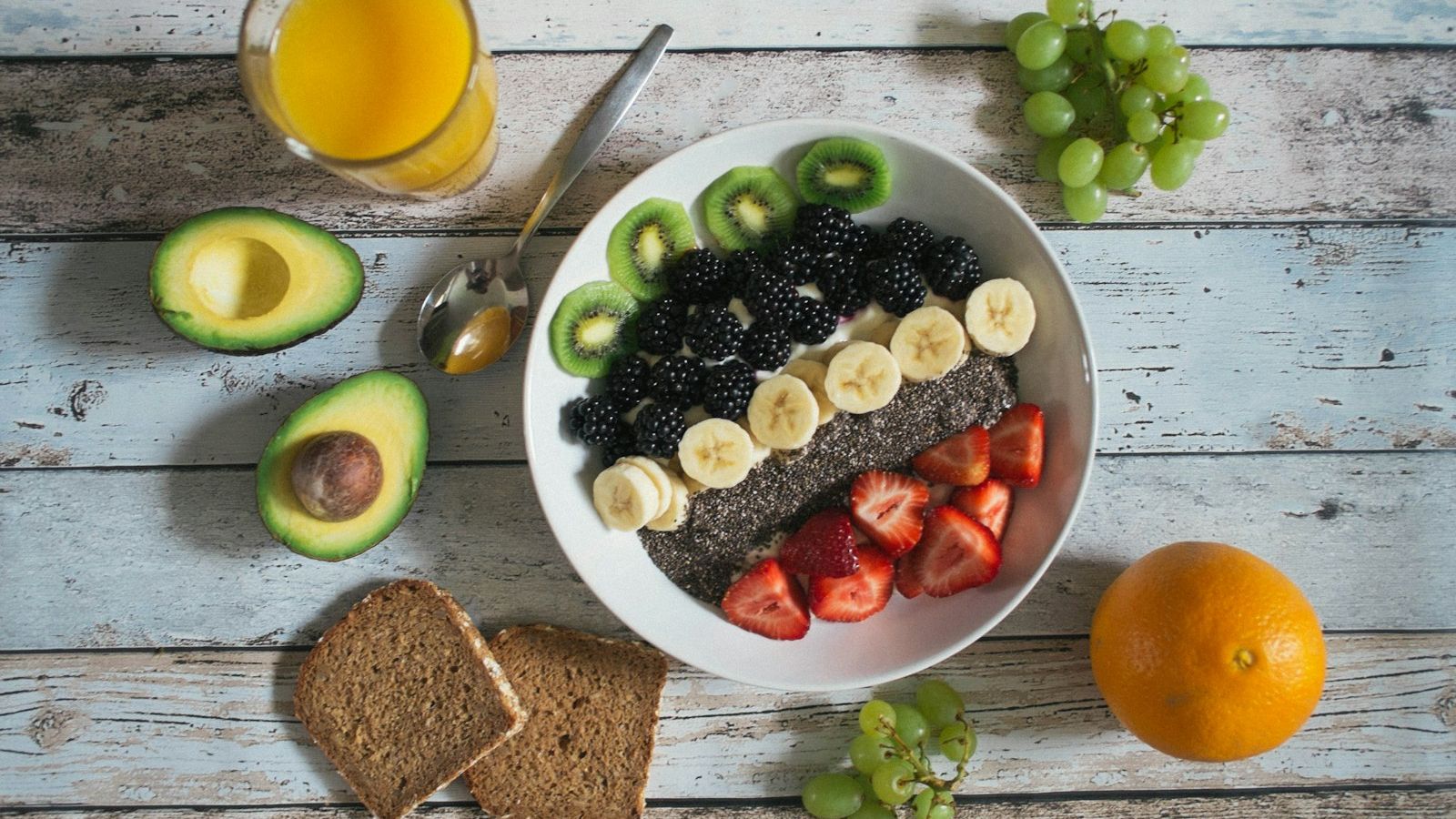
- Banana (ripe, one medium) - low-FODMAP
- Papaya (ripe, moderate portion)
- Kiwi (one fruit)
- Grapes (handful)
- Strawberries (handful)
Safe spices and condiments:
- Cumin (jeera), coriander (dhania), turmeric, ginger (fresh, in moderate amounts), chilli (plain dried/fresh), mustard seeds, curry leaves, fenugreek (methi seeds in small amounts), cinnamon, cardamom, cloves
What to Limit or Avoid
High-FODMAP foods common in Indian kitchens:
- Onion and garlic - highest-FODMAP ingredients in Indian cooking; use hing substitute
- Wheat roti, paratha, naan, maida - fructans; switch to rice alternatives during elimination
- Large portions of rajma, chole, dal (toor/arhar in large portions)
- Cauliflower, cabbage, broccoli - avoid during elimination; test in reintroduction
- Mango (large portions), apple, pear, watermelon
- Dairy with lactose (if lactose is a personal trigger): regular milk, soft cheese, paneer made from unhomogenised milk
The Stress-Gut Connection
The gut-brain axis is real and clinically significant in IBS. The enteric nervous system (sometimes called the "second brain") contains approximately 100 million neurons and communicates bidirectionally with the central nervous system via the vagus nerve.
For many IBS sufferers, symptoms worsen dramatically during periods of stress, anxiety, or emotional difficulty - independent of diet. This is not "all in your head" - the physiological pathway is measurable. Stress alters gut motility, increases intestinal permeability, and modifies gut microbiome composition.
This means that dietary management alone may not fully control IBS if stress is a significant driver. Evidence-based interventions for the gut-brain component include: gut-directed hypnotherapy (the most strongly evidence-based psychological intervention for IBS), cognitive behavioural therapy, low-intensity exercise, and diaphragmatic breathing practices.
The Three Phases of Low-FODMAP
Phase 1 - Elimination (2-6 weeks): Remove all high-FODMAP foods. Most people with IBS experience significant symptom improvement within 2-4 weeks.
Phase 2 - Reintroduction (8-12 weeks): Systematically test one FODMAP category at a time, in increasing amounts, to identify personal triggers. Not everyone reacts to all FODMAPs.
Phase 3 - Personalised maintenance: Long-term eating pattern based on your specific tolerances. Most people can tolerate some high-FODMAP foods and maintain a much richer diet than the elimination phase suggests.
The elimination phase should not become a permanent dietary identity. The goal is finding your specific triggers, not eating as restrictively as possible forever.
For a personalised gut health nutrition consultation, see our Gut Health programme.
Frequently asked questions
What Indian foods are safe for IBS?
Rice and rice-based foods (idli, dosa, poha) are among the most IBS-friendly staples. Safe vegetables include lauki, carrots, french beans, cucumber, and tomatoes. Safe protein sources include firm paneer, tofu, eggs, and fish (non-fried). The hing-infused oil technique allows Indian flavours without the high-FODMAP onion and garlic that trigger many IBS sufferers.
Is curd good for IBS?
Curd can be beneficial for IBS, particularly for IBS-D. The live cultures in fresh homemade dahi may help modulate the gut microbiome. However, if lactose intolerance is a co-trigger, even curd may cause symptoms. Plain curd in 2/3 cup portions is low-FODMAP. If symptoms continue with curd, lactose-free curd is an alternative. Commercial flavoured yoghurts with added HFCS or sweeteners should be avoided.
Is rice better than roti for IBS?
For most IBS sufferers, yes - rice is significantly lower-FODMAP than wheat roti. Wheat contains fructans (a type of FODMAP) that are a common IBS trigger, particularly for IBS-D. During the low-FODMAP elimination phase, switching to rice, idli, dosa, or other rice-based preparations is usually one of the most impactful single changes.
Can I eat dal with IBS?
Some dal, in appropriate portions. Moong dal (especially well-soaked and cooked) is lower-FODMAP than toor dal. Canned lentils drained and rinsed are lower-FODMAP than home-soaked batches. Large portions of high-FODMAP legumes (rajma, chole) are common triggers. Start with small portions of moong dal and test tolerance rather than eliminating all legumes - protein from legumes is important.
Does stress make IBS worse?
Yes, significantly. IBS has a strong gut-brain component - the enteric nervous system is directly responsive to stress hormones and emotions. Physiological stress alters gut motility (causing both diarrhoea and constipation depending on the individual and stress type), increases intestinal permeability, and disrupts gut microbiome balance. For many IBS sufferers, stress management interventions are as important as dietary management.
MSc Clinical Nutritionist · Diabetes Educator · Certified Nutrigenomics Specialist
Dt. Trishala Goswami is a clinical nutritionist and certified diabetes educator who designs personalized, science-backed nutrition programs for clients across India and abroad. She specializes in diabetes, PCOS, gut health, and nutrigenomics.
More about Dt. TrishalaWant a personalised Gut Health plan?
Articles can’t replace personalised care. Book a 30-min consultation with Dt. Trishala.
Living outside India? See how online consultations work for NRIs & global clients →
Related reads
The Best Foods for Gut Health: An Indian Dietitian's List
A healthy gut is built from everyday Indian food, not expensive supplements. A clinical nutritionist ranks the best foods for gut health - dahi, fermented batters, dals, and prebiotic vegetables - and how to eat them for real results.
Constipation Solutions: Beyond Fibre and Water
You are eating enough fibre. You are drinking enough water. And you are still constipated. A clinical nutritionist explains the hidden causes - from magnesium deficiency to thyroid dysfunction - and what actually works.
Fermented Indian Foods: Your Gut's Best Friends
Indian cuisine is one of the world's richest traditions of fermented foods - from idli batter to kanji to chaas. A clinical nutritionist explains the probiotic science behind these everyday preparations.