Guava Benefits: Nutrition, Diabetes, Weight Loss and How Much to Eat

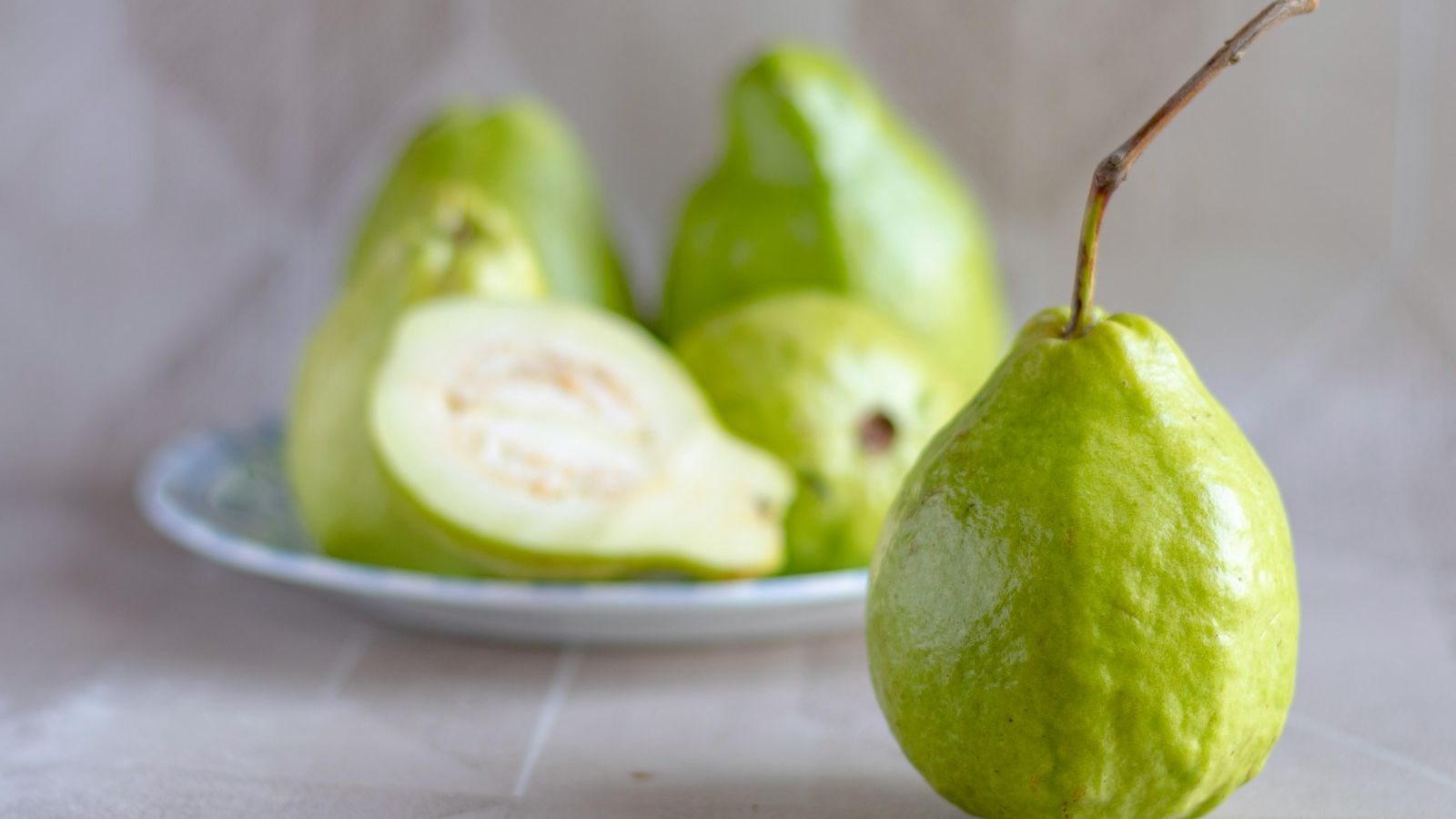
"Guava is one of the easiest fruits to fit into a diabetes plan, but the benefit comes from the whole fruit, not the reputation. Cut it into pieces, keep the peel, stop at about 80 grams and eat it with a few nuts. Blend it into juice and you lose much of what made it a good choice." - Dt. Trishala Goswami, MSc Clinical Nutritionist, Diabetes Educator
Dt. Trishala Goswami, MSc Clinical Nutritionist · Diabetes Educator · Certified Nutrigenomics Specialist · Last Updated: October 2026
The short answer: the main guava benefits are a lot of vitamin C and fibre for very few calories. In a small trial, whole guava pieces had a low glycaemic index of 29. For diabetes, eat it whole, with the peel, in portions of about 80 g, spread across the day. Skip guava juice. The leaf tea studies are small, so treat leaf products with caution.
Guava goes by many names in India: amrood in Hindi, peru in Marathi, peyara in Bengali, koyya in Tamil and jama in Telugu. It is cheap, it is everywhere in winter, and it has a reputation as a "diabetic's fruit". Some of that is earned. Some of it rests on research into guava leaves, not the fruit. This guide separates the two.
Guava nutrition: what 100 g actually contains
The most complete verified values come from USDA FoodData Central (common guava, raw, entry 173044). Indian varieties differ in size, ripeness and flesh colour, so treat these as a guide rather than an exact label.
| Nutrient | Per 100 g | Per 80 g portion (calculated) |
|---|---|---|
| Energy | 68 kcal | About 54 kcal |
| Carbohydrate | 14.3 g | About 11.5 g |
| Of which sugars | 8.9 g | About 7.1 g |
| Dietary fibre | 5.4 g | About 4.3 g |
| Protein | 2.6 g | About 2 g |
| Vitamin C | 228 mg | About 183 mg |
| Potassium | 417 mg | About 334 mg |
| Folate | 49 µg | About 39 µg |
Source: USDA FoodData Central, SR Legacy 173044. The 80 g column is our arithmetic from the USDA values.
Vitamin C. The NHS says adults aged 19 to 64 need 40 mg of vitamin C a day, and the body cannot store it. One 80 g portion of guava provides roughly four times that.
Fibre. The NHS recommends 30 g of fibre a day. An 80 g portion gives about 4 g, a meaningful share for a fruit that costs a few rupees.
Potassium. At 417 mg per 100 g, guava is a high-potassium fruit. That is fine for most people but matters a great deal in kidney disease. More on that below.
Guava and iron for vegetarians
Dal, chana and whole grains supply much vegetarian iron but also contain phytate, which blocks its absorption. In a classic study, adding vitamin C counteracted that effect (Hallberg et al., American Journal of Clinical Nutrition, 1989). A guava after a dal and roti lunch puts that to work. Our guide to iron deficiency in Indian women covers the rest of the plate.
Is guava good for diabetes?
Yes, for most people with diabetes, whole guava in a measured portion is a good fruit choice. Here is what the research shows.
What the glycaemic index studies found
The glycaemic index (GI) ranks how quickly a carbohydrate food raises blood sugar compared with glucose. Diabetes UK classes 55 or below as low, 56 to 69 as medium and 70 or more as high.
The best direct measurement we found comes from Singapore. In a randomised crossover trial, 19 healthy adults (9 older and 10 younger) ate guava cut into bite-sized pieces and guava blended into a puree. Guava bites had a GI of 29 and guava puree a GI of 47. Both are low, but blending raised the response, and older participants had a greater blood sugar response than younger ones (Tey et al., Journal of Nutrition, Health and Aging, 2017).
So whole guava is low GI, and the more you break it down, the faster the sugar arrives. But 19 people is a small study, and none had diabetes. Your glucometer 2 hours after eating tells you more than any table.
Whole guava versus juice
An analysis of three US cohorts, covering more than 187,000 health professionals, linked whole fruit with a slightly lower risk of type 2 diabetes and fruit juice with a higher risk (Muraki et al., BMJ, 2013). Guava was not studied, and this kind of research shows association, not cause. It agrees with Diabetes UK, which says juices and smoothies are less beneficial than whole fruit because they have less intact fibre. Many packaged guava drinks are also sweetened nectars, so read the ingredients list.
What a trial in India found
At AIIMS Bhubaneswar, 45 healthy MBBS students were split into three groups: 400 g of ripe guava a day with the peel for 6 weeks, the same without the peel, or none. Both guava groups saw falls in BMI and blood pressure, and the without-peel group saw falls in total cholesterol, triglycerides and LDL cholesterol. The with-peel group, unexpectedly, saw rises in fasting glucose, total cholesterol and triglycerides (Kumari et al., Journal of Clinical and Diagnostic Research, 2016).
This was a small study in young people without diabetes, eating five standard portions a day. It does not show that guava lowers blood sugar, and it is not a reason to peel your guava. It does show that online claims run far ahead of the evidence.
How much guava per day for people with diabetes?
Diabetes UK counts 80 g as one portion of fresh fruit, roughly what fits in the palm of an adult hand, and advises spreading fruit through the day because a lot at once has a bigger impact on blood sugar. Its glycaemic index guidance adds that the amount of carbohydrate you eat has a bigger effect on blood sugar than GI alone.
Indian guavas vary a lot in size, so weigh one from your usual seller once to know whether your portion is half a guava or a whole one.
A practical approach for most adults with diabetes:
- Eat one 80 g portion at a time. That is about 11 to 12 g of carbohydrate, about 4 g of it fibre.
- Have it as a snack, not alongside a large rice or roti portion. Mid-morning or early evening works well.
- Pair it with protein or fat. A few almonds, roasted chana or peanuts, or a bowl of curd.
- Count it in your day's fruit. One or two guava portions a day, spaced apart, fits most plans. Your dietitian may adjust this.
- Check your own response. If you test at home, check before and 2 hours after your guava snack on a few days. If the reading stays within the target your doctor or diabetes team gave you, guava is working for you. If it does not, tell them.
To compare guava with other fruits, see diabetes-friendly fruits in India and our glycemic index reference for Indian foods. For the two fruits people worry about most, read is banana good for diabetes and is mango good for diabetes. To see where fruit fits in a full week, use our 7-day diabetic meal plan.
Guava for weight loss
No single food melts fat. What guava offers is volume and fibre for few calories: an 80 g portion has about 54 kcal and 4 g of fibre, which makes it more filling than biscuits or namkeen with similar calories.
Across three US cohorts of 133,468 adults followed for up to 24 years, each extra daily serving of fruit was linked with about 0.24 kg (0.5 lb) less weight gain over each 4-year period, with berries and apples or pears showing the largest differences (Bertoia et al., PLoS Medicine, 2015). Guava was not studied individually, and this was observational research, but guava is a high-fibre fruit like the berries, apples and pears that did best.
Use it as a swap: the 5 pm guava with chaat masala in place of the 5 pm samosa or biscuits with chai.
Guava leaves and guava leaf tea: what the evidence shows
Guava leaves have traditionally been used for diabetes in East Asia and parts of Africa. In Japan, a guava leaf tea made with an aqueous leaf extract is approved as a Food for Specified Health Uses, a government category for foods allowed to carry a health claim.
A review explains that the extract slows the gut enzymes that break down starch and sugar, and summarises a few human trials, including a crossover study in 20 hospitalised patients with type 2 diabetes and a 12-week trial in 15 men with prediabetes or mild diabetes, and reports lower post-meal glucose with no hypoglycaemia (Deguchi and Miyazaki, Nutrition and Metabolism, 2010).
Read that carefully before you buy a packet:
- The trials are small and short. The ones we could check had 15 to 23 participants and ran for 12 weeks or less.
- The review's authors work for the company that makes the tea. The same company's laboratory ran a safety study that found the tea unlikely to interact with drugs, based on laboratory tests and rats, not people (Kaneko et al., Phytotherapy Research, 2013).
- A standardised extract is not the same as home-brewed leaves. A cup of boiled leaves from a garden tree has an unknown strength.
- Extracts are not the fruit. A concentrated guava fruit extract reduced the blood sugar rise after a glucose drink in 31 young healthy adults (König et al., Nutrients, 2019), but a laboratory extract is not a guava eaten at home.
Guava leaf tea is promising but unproven, and it does not replace any diabetes medicine. We do not give a dose here. If you want to try it, talk to your doctor first, especially if you take insulin or a sulfonylurea such as gliclazide or glimepiride.
Guava for constipation and gut health
Guava is often suggested for constipation. It is high in fibre, and the NHS constipation advice starts with more fibre, more fluids and more activity. We did not find a controlled trial testing guava fruit for constipation, so think of it as one good fibre source rather than a remedy. Drink water with it, since the NHS warns that fibre cannot do its job without fluid, and eat the peel if it agrees with you.
Guava leaf preparations are traditionally used for the opposite problem, diarrhoea. A systematic review found mostly animal and laboratory studies with only three clinical trials, and called for more research on clinical value and safety (Garrido et al., Journal of the Science of Food and Agriculture, 2024). For diarrhoea with fever, blood or dehydration, see a doctor.
For a fuller plan, read constipation solutions beyond fibre and water.
How to eat guava: the best ways
| Way to eat it | Good for blood sugar? | Why |
|---|---|---|
| Whole guava, cut into pieces, with peel | Best choice | Low GI in bite form, all the fibre stays |
| With chaat masala, kala namak and lemon | Good | Same fruit, more flavour; go light on salt |
| In kachumber with cucumber and onion | Good | Extra volume, slower eating |
| Guava chutney with green chilli, no sugar | Good | A condiment portion with meals |
| Guava puree or smoothie | Less good | Higher GI (47 versus 29 in the Singapore study) |
| Packaged guava juice or nectar | Avoid | Often sweetened, little intact fibre |
| Guava jelly, jam or "guava cheese" | Avoid | Mostly added sugar |
Choose a ripe, sweet-smelling guava and wash it well, since you are eating the skin. The seeds are hard, so if you have dental problems or dentures, scoop out the seedy centre. Most chaat masala blends contain kala namak, so if you have high blood pressure use a pinch, or try roasted jeera and lemon. Our high blood pressure diet guide has more low-salt ideas.
Who should be careful with guava
People with IBS. Monash University, which developed the low FODMAP diet, found a serve of well-ripened guava was low in FODMAPs, while the same serve of unripe guava was high. Choose ripe, fragrant guava and avoid hard green ones, and check the Monash app for current serve sizes. Our low FODMAP Indian diet guide explains how to test your tolerance.
People with kidney disease. The National Kidney Foundation lists about 688 mg of potassium in a cup of guava. If you have been told to limit potassium, ask your kidney dietitian or nephrologist about portions first. Our kidney diet guide lists lower-potassium fruits.
People taking diabetes medicines. Guava fruit is simply part of your day's carbohydrate. Leaf teas, capsules and extracts are different, because they are taken to lower blood sugar. If you take insulin or a sulfonylurea, discuss any leaf product with your doctor. Never stop or reduce a prescribed medicine on your own. On metformin? See our guide to eating well on metformin.
Pregnancy and breastfeeding. Guava fruit in normal portions is an everyday food. The leaf trials we reviewed did not study pregnant or breastfeeding women, so avoid leaf teas and extracts unless your doctor agrees. For gestational diabetes, see our gestational diabetes diet guide.
Allergies. If guava causes itching in the mouth, swelling or a rash, stop and see a doctor.
This article is general nutrition guidance and is not a substitute for medical care. Diabetes medicines are prescribed and adjusted by your doctor. For personalised care, consult your doctor or book a consultation with Dt. Trishala Goswami.
For Indians abroad: where to find guava and what to swap
As of 2026, fresh guava can still be hard to find in mainstream supermarkets in the UK, US, Canada and Australia.
- Where to look: Indian, Pakistani and Bangladeshi grocers, Southeast Asian and Chinese supermarkets, and Latin American stores in the US and Canada, where guava is often labelled guayaba. In the UAE and Singapore, large supermarkets and Indian grocers often stock it.
- What to skip: tinned guava in syrup, guava nectar cartons and frozen guava pulp with added sugar.
- Swaps when you cannot find guava: an apple or pear with the skin, a portion of berries, or an orange. Apples, pears and berries were among the fruits most strongly linked with less weight gain in the US cohort study above. Keep the same 80 g portion.
For more, see how to eat healthy Indian food abroad.
Related reading
- Diabetes-friendly fruits in India
- Is banana good for diabetes?
- Is mango good for diabetes?
- Glycemic index of Indian foods: a reference
- Diabetic meal plan: 7-day Indian menu
- Low FODMAP Indian diet: a practical guide
Want to know how fruit fits your own readings? Book a consultation with Dt. Trishala Goswami for a diabetes plan built around your HbA1c, medicines and the foods you actually buy, whether you shop at a sabzi mandi in Pune or an Indian grocer in Leicester, working alongside your doctor. Online consultations for clients in India and abroad. You can also explore our Diabetes Management program.
Frequently asked questions
What are the main health benefits of guava?
Guava gives a lot of vitamin C and fibre for few calories. Per 100 g, USDA data lists 228 mg of vitamin C, 5.4 g of fibre and 68 kcal. One 80 g portion covers about four times the NHS daily vitamin C need. Whole guava pieces also had a low GI of 29 in a small trial.
Is guava good for diabetes?
Yes, in a measured portion. Whole guava pieces had a low GI of 29 in a small trial. Eat about 80 g at a time, with the peel, spread across the day, and pair it with a few nuts or curd. Avoid guava juice, nectar and jelly. Check your glucometer 2 hours after eating to see your own response.
How much guava can I eat in a day?
For most adults with diabetes, one or two portions of about 80 g a day, spaced apart, fits well within total fruit. Weigh one guava from your usual seller once, because sizes vary a lot. If you have kidney disease, ask your renal team first, because guava is high in potassium.
Does guava leaf tea lower blood sugar?
Small trials of a standardised Japanese guava leaf tea reported lower post-meal blood sugar, but they had 15 to 23 participants, and the review was written by researchers from the company that makes it. Home-brewed leaves have unknown strength. Leaf tea does not replace diabetes medicine, so talk to your doctor before trying it.
Is guava good for weight loss?
It helps as a swap. An 80 g portion has about 54 kcal and 4 g of fibre, so it fills you up more than biscuits or namkeen with similar calories. Large US cohort studies linked eating more fruit, especially higher-fibre fruit, with less weight gain over time. Guava supports a calorie-aware diet but does not cause weight loss on its own.
Can I drink guava juice if I have diabetes?
It is better to eat the fruit. In the Singapore study, blending guava into a puree raised its GI from 29 to 47. Diabetes UK says juices and smoothies are less beneficial than whole fruit because they lose intact fibre, and many packaged guava drinks are sweetened. If you have juice occasionally, keep it to a small glass with a meal.
References
- Healthy diet - fact sheet (World Health Organization)
- The Nutrition Source (Harvard T.H. Chan School of Public Health)
- Dietary Guidelines for Indians (ICMR - National Institute of Nutrition)
- Food & Health Tips (Academy of Nutrition and Dietetics)
MSc Clinical Nutritionist · Diabetes Educator · Certified Nutrigenomics Specialist
Dt. Trishala Goswami is a clinical nutritionist and certified diabetes educator who designs personalized, science-backed nutrition programs for clients across India and abroad. She specializes in diabetes, PCOS, gut health, and nutrigenomics.
More about Dt. TrishalaWant a personalised Diabetes plan?
Articles can’t replace personalised care. Book a 30-min consultation with Dt. Trishala.
Living outside India? See how online consultations work for NRIs & global clients →
Related reads
Why Are Indians So Prone to Diabetes? What Famine and the Womb Tell Us
Why do slim Indians develop prediabetes and PCOS? Part of the answer may lie in how a baby grows in the womb, and in India's long history of famine. What the evidence shows, what it does not, and what you can do.
Diabetic Meal Plan: 7-Day Indian Menu for Type 2 Diabetes
A full week of Indian meals for type 2 diabetes, built on the Diabetes Plate method. Vegetarian menus with egg and non-veg swaps, hand and katori portions, snacks, chai and fruit, eating order, how to check the plan is working in mg/dL and mmol/L, and a grocery list for Indians c
Insulin Resistance Symptoms: The Signs, the Tests, and Why Indians Should Look Closer
Dark skin patches, a growing waist, PCOS, or simply nothing at all. A clear guide to insulin resistance symptoms, which signs are well proven and which are not, why Indians often develop it at a normal weight, and the blood tests that actually tell you.