The Best Foods for Healthy Skin and Hair: An Indian Dietitian's List

"Most people fighting hair fall and dull skin are spending on serums and supplements while the real gap is on their plate - protein and iron. When a client finally eats enough of both, the change is visible: less hair on the comb, stronger regrowth, and clearer skin, usually within three to four months. Hair and skin are slow to respond, but they always respond to better nutrition." - Dt. Trishala Goswami, MSc Clinical Nutritionist, Certified Nutrigenomics Specialist
A client - let us call her Tanvi, 30 - came in distressed about heavy hair fall and tired-looking skin, with a shelf full of biotin gummies and expensive serums. Her diet told the real story: barely 35g of protein a day and low iron. We did not add a single supplement at first. We raised her protein with dal, paneer, and eggs, added iron-rich foods with vitamin C, and worked in omega-3s and zinc. By month four her hair fall had visibly reduced and her skin looked brighter - changes the gummies had never delivered.
Healthy skin and hair are built from the inside out, and the building blocks are ordinary Indian food.
Why Skin and Hair Reflect What You Eat
Your skin and hair are among the first tissues to show a nutrition gap, because the body prioritises vital organs over them when nutrients are scarce. Hair fall, dull or breakout-prone skin, and brittle nails are often the visible edge of an internal shortfall - most commonly protein, iron, zinc, omega-3, or vitamin D. A food earns a place on this list when it supplies one of these building blocks, supports collagen, or feeds the gut, which is closely tied to skin health. For the gut-skin link specifically, see the acne, diet, and gut-skin connection.
The Best Foods for Healthy Skin and Hair
1. Protein Foods (Dal, Paneer, Eggs, Fish)
Why they work: Hair is made almost entirely of a protein called keratin, and skin renewal depends on protein too. Inadequate protein is the single most common reason for diffuse hair fall in the clients I see. Build every meal around a protein source - dal, paneer, tofu, eggs, dahi, or fish. See the best high-protein vegetarian foods for how to hit your target.
2. Iron-Rich Foods with Vitamin C
Why they work: Iron deficiency is a leading driver of hair fall, especially in Indian women, and it dulls the skin. Pair iron-rich foods (dals, leafy greens, jaggery, dates) with vitamin C (lemon, amla, citrus) to dramatically boost absorption. See iron deficiency in Indian women.
3. Amla and Vitamin C Foods
Why they work: Vitamin C is essential for collagen, the protein that keeps skin firm and supports the hair follicle, and it boosts iron absorption. Amla is one of the richest sources available; citrus fruits, guava, and capsicum add more. Fresh amla or unsweetened amla juice is a traditional skin-and-hair staple for good reason.
4. Omega-3 Sources (Flax, Walnuts, Fish)
Why they work: Omega-3 fats keep the skin barrier supple and hydrated and calm the inflammation behind acne and a flaky scalp. For vegetarians, ground flax and walnuts are the key sources; for non-vegetarians, fatty fish like rawas and bangda. A tablespoon of ground flax daily is an easy win.
5. Zinc Foods (Pumpkin Seeds, Chana, Cashews)
Why they work: Zinc supports tissue repair, oil-gland regulation (relevant to acne), and hair growth - a zinc gap is a recognised cause of hair fall. Pumpkin seeds, chana, cashews, and dals are accessible Indian sources. A small daily handful of seeds covers a lot of ground.
6. Dahi and Gut-Supporting Foods
Why they work: The gut and skin are closely linked - an unhappy gut often shows up as breakouts or dull skin. Dahi, chaas, and fermented foods supply live cultures that support a healthy microbiome and, indirectly, clearer skin. A katori of plain dahi daily is simple skin nutrition.
7. Colourful Vegetables and Berries
Why they work: Bright vegetables and seasonal fruits deliver antioxidants (beta-carotene, vitamins A and C, polyphenols) that protect skin from oxidative damage and support a healthy scalp. Carrots, tomatoes, leafy greens, beetroot, and jamun all earn their place. Variety across the week matters most.
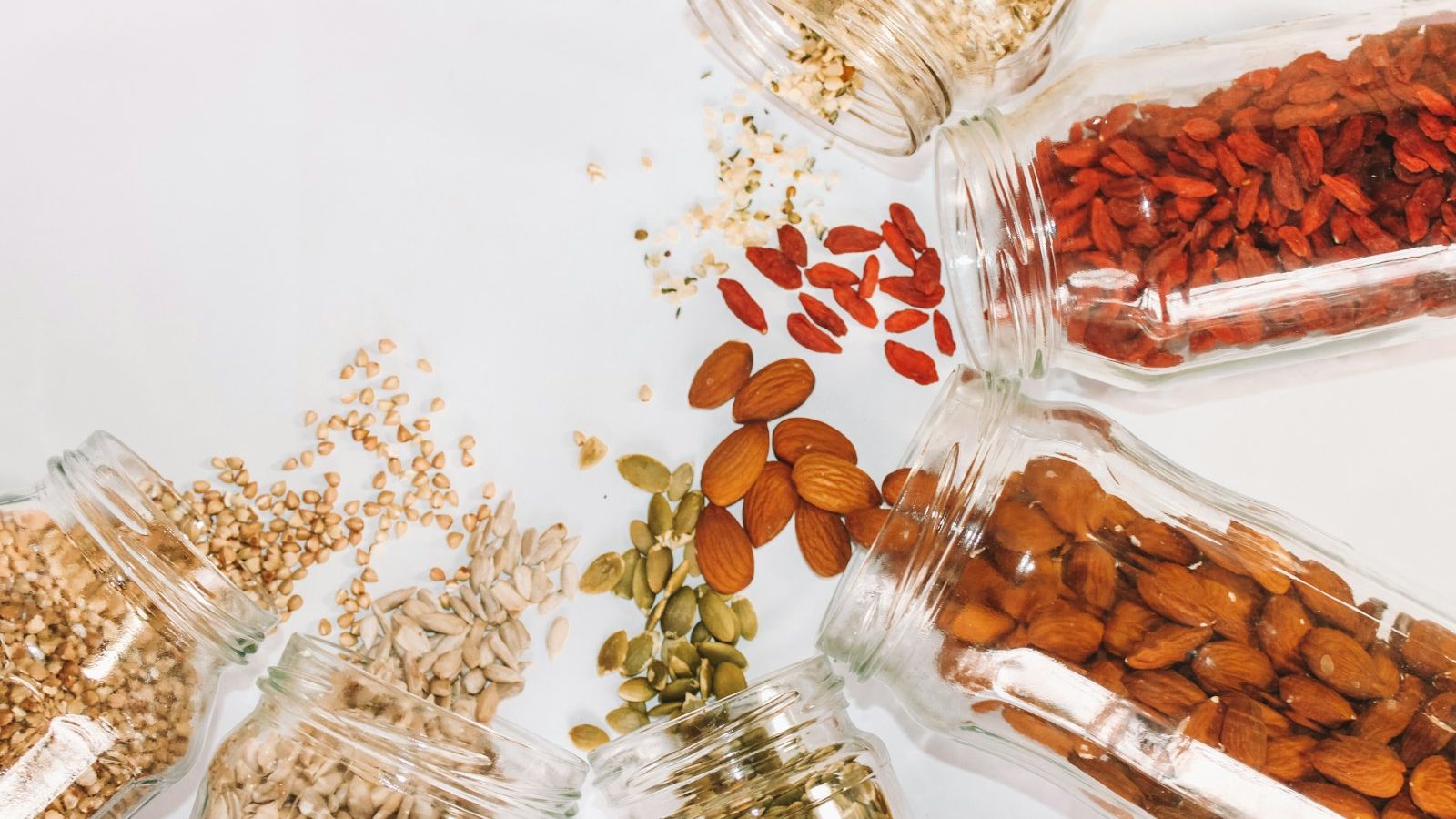
8. Nuts and Seeds (Almonds, Walnuts, Sunflower Seeds)
Why they work: Nuts and seeds combine vitamin E, healthy fats, zinc, and selenium - a near-perfect skin-and-hair mix. Vitamin E in particular protects skin cells from damage. A small daily handful is one of the easiest additions on this list.
9. Biotin and B-Vitamin Foods (Eggs, Nuts, Whole Grains, Dals)
Why they work: Biotin and the wider B-vitamin family support keratin production and scalp health. The good news: outright biotin deficiency is rare, and these foods - eggs, nuts, whole grains, dals - supply it naturally, which is why most people do better fixing the whole diet than chasing a single biotin pill.
10. Adequate Water and Hydrating Foods
Why they work: Skin needs hydration to look plump and healthy, and the gut needs water to clear waste that otherwise shows on the skin. Water, chaas, coconut water, and water-rich vegetables like cucumber and bottle gourd all contribute. Simple, but genuinely overlooked.
How to Eat for Skin and Hair
The foods matter, but the pattern and patience decide the result:
- Protein at every meal - the foundation; most skin and hair issues start here.
- Iron with vitamin C - pair them to actually absorb the iron.
- A daily omega-3 source - ground flax is the easiest.
- A daily gut food - dahi or chaas for the gut-skin axis.
- Cut the disruptors - excess sugar, refined flour, and fried food worsen acne and inflammation for many people.
- Give it 3 to 6 months - hair grows slowly, so judge by the new growth and the comb, not by next week.
What Most Skin and Hair Food Lists Miss
Most lists chase trendy single nutrients and miss what actually moves the needle:
- Protein and iron are the usual gaps, not biotin. The supplements people buy rarely address the real shortfall. Fix protein and iron first.
- It takes 3 to 6 months. Hair grows about a centimetre a month, so nutrition changes show up slowly. People quit at week three, right before the results would have started.
- Topical products cannot fix an internal deficiency. No cream or serum compensates for a protein or iron gap - the follicle and skin cells are built from what you eat.
- The gut shows on the skin. Persistent breakouts and dullness often trace back to gut health, which is why fermented and fibre-rich foods belong on a skin list.
What to Cut Back to Let These Foods Work
Adding good foods helps less if the disruptors stay. For many people, reducing excess sugar, refined flour (maida), deep-fried food, and very high-glycaemic meals visibly improves acne and skin clarity, because these drive the inflammation and hormonal shifts that show on the skin.
Skin and hair concerns are individual, and persistent or sudden hair loss deserves a proper assessment. For a plan built around your symptoms, labs, and diet, explore our Skin and Hair programme. If hair fall is tied to PCOS, see PCOS hair loss nutritional strategies.
This article is for education and is not a substitute for medical care. Sudden, patchy, or severe hair loss, or persistent skin conditions, should be evaluated by a doctor or dermatologist to rule out underlying causes.
Frequently asked questions
What foods are best for hair growth and skin?
The best foods for skin and hair supply their core building blocks: protein (dal, paneer, eggs, fish), iron paired with vitamin C (dals and greens with lemon or amla), omega-3s (ground flax, walnuts, fish), zinc (pumpkin seeds, chana), vitamin C (amla, citrus), gut-supporting dahi, colourful vegetables and berries, and nuts and seeds. Protein and iron are the most important because hair is made of protein and iron deficiency is a top cause of hair fall.
Which deficiency causes hair fall?
The most common nutritional causes of hair fall are inadequate protein and iron deficiency, followed by low zinc, vitamin D, and sometimes B-vitamins. In Indian women especially, low iron is a frequent and overlooked driver. This is why a daily diet rich in protein and iron, with vitamin C to aid absorption, often does more for hair than any single supplement. Persistent hair loss should also be checked by a doctor.
How long does it take for diet to improve skin and hair?
Skin can improve within a few weeks, but hair takes longer - usually 3 to 6 months - because hair grows only about a centimetre a month and you are waiting on new growth. The common mistake is giving up at week three, just before results begin. Judge progress by reduced shedding and fresh regrowth over months, not by quick changes.
Do biotin supplements really help hair?
For most people, no - true biotin deficiency is rare, and the more common gaps are protein and iron, which biotin does not address. Eggs, nuts, whole grains, and dals supply biotin naturally as part of a balanced diet. Unless a deficiency has been identified, fixing overall protein, iron, and zinc usually does far more for your hair than a biotin pill.
Can food clear acne?
Food can meaningfully support clearer skin, though it is rarely the only factor. Reducing excess sugar, refined flour, and fried food lowers the inflammation and blood-sugar swings linked to breakouts, while omega-3s, zinc, and gut-supporting foods help calm the skin. Because the gut and skin are connected, improving the diet often improves acne - alongside, not instead of, proper skin care and a dermatologist's input when needed.
Does drinking water improve skin?
Adequate hydration helps skin look plump and supports the body in clearing waste that can otherwise show on the skin, so it is genuinely useful - but water alone will not fix a protein, iron, or omega-3 gap. Think of hydration as one supportive piece alongside the nutrient-rich foods that actually build healthy skin and hair. Water-rich foods like cucumber and bottle gourd help too.
MSc Clinical Nutritionist · Diabetes Educator · Certified Nutrigenomics Specialist
Dt. Trishala Goswami is a clinical nutritionist and certified diabetes educator who designs personalized, science-backed nutrition programs for clients across India and abroad. She specializes in diabetes, PCOS, gut health, and nutrigenomics.
More about Dt. TrishalaWant a plan built around you?
Articles can’t replace personalised care. Book a 30-min consultation with Dt. Trishala.
Living outside India? See how online consultations work for NRIs & global clients →
Related reads
The Best Anti-Inflammatory Indian Foods, According to a Clinical Nutritionist
Chronic low-grade inflammation quietly drives PCOS, insulin resistance, gut issues, and joint pain. A clinical nutritionist ranks the best anti-inflammatory Indian foods - and the everyday way to eat them for real effect.
The Best High-Protein Vegetarian Foods in India, Ranked by a Nutritionist
Most Indian vegetarians eat far less protein than they think. A clinical nutritionist ranks the best high-protein vegetarian foods available in India - with grams per serving and a simple plan to reach your daily target.
Matki: The Superfood Legume - Nutrition, Health Benefits, and Recipes
Matki: The Superfood Legume - Nutrition, Health Benefits, and Recipes - nutrition insights from Dt. Trishala Goswami, MSc Clinical Nutritionist.